
Why this matters now
Every five years, the Brazos River Authority (BRA) conducts a planning study. The last study was in 2022, and it predicts that at least one city in each of the 37 counties will have water shortages in the next 14 years (by 2036). The study did not account for the impact of data centers. The next report comes out in 2027 and will also not include data center impact. Reality will continue to be worse than the forecast.
The Texas Water Development Board (TWDB) denotes most of the Brazos River as “Region G.” While there is some overlap, generally speaking BRA is responsible for planning, forecasting, and allotments, while TWDB is responsible for budgeting and mitigation projects.
- Brazos River Authority 2022 report
- Texas Water Development Board Region G Water Plan
- TWDB socioeconomic impact for Region G, 2026 report
We are already in a drought
As of April 11, 2026, we are in a Stage 1 drought, and BRA expects us to hit Stage 2 by July.
Needs reviewThis date is from April. Update it to the current drought stage before launch.
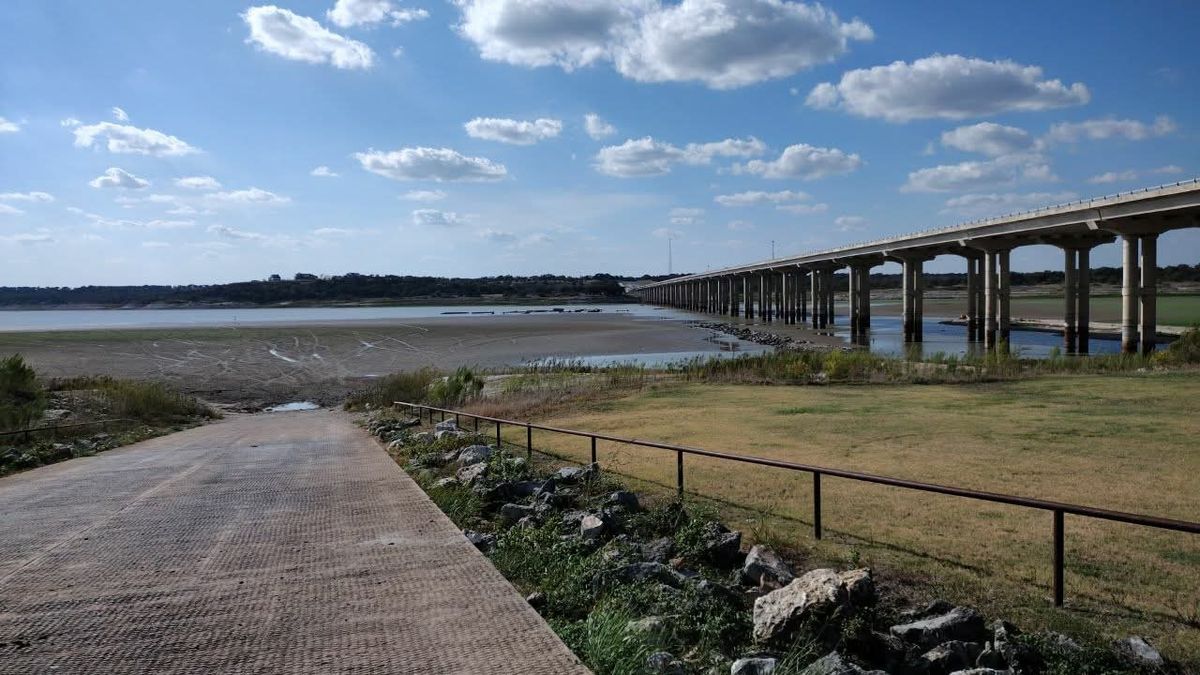
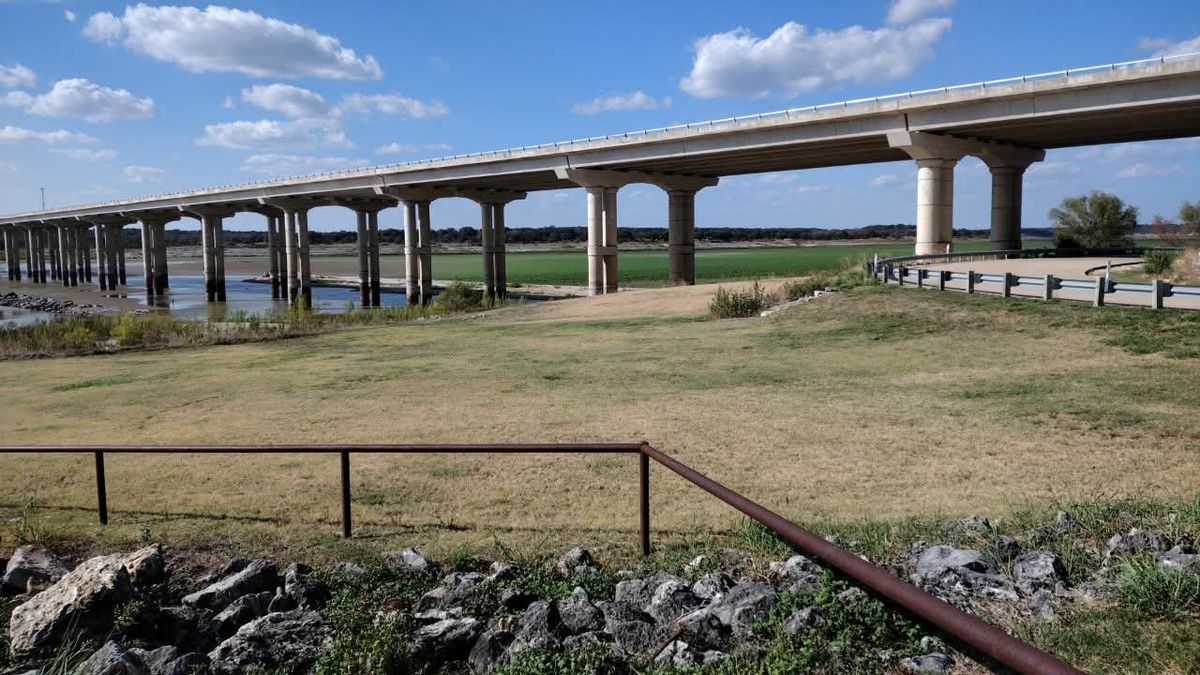
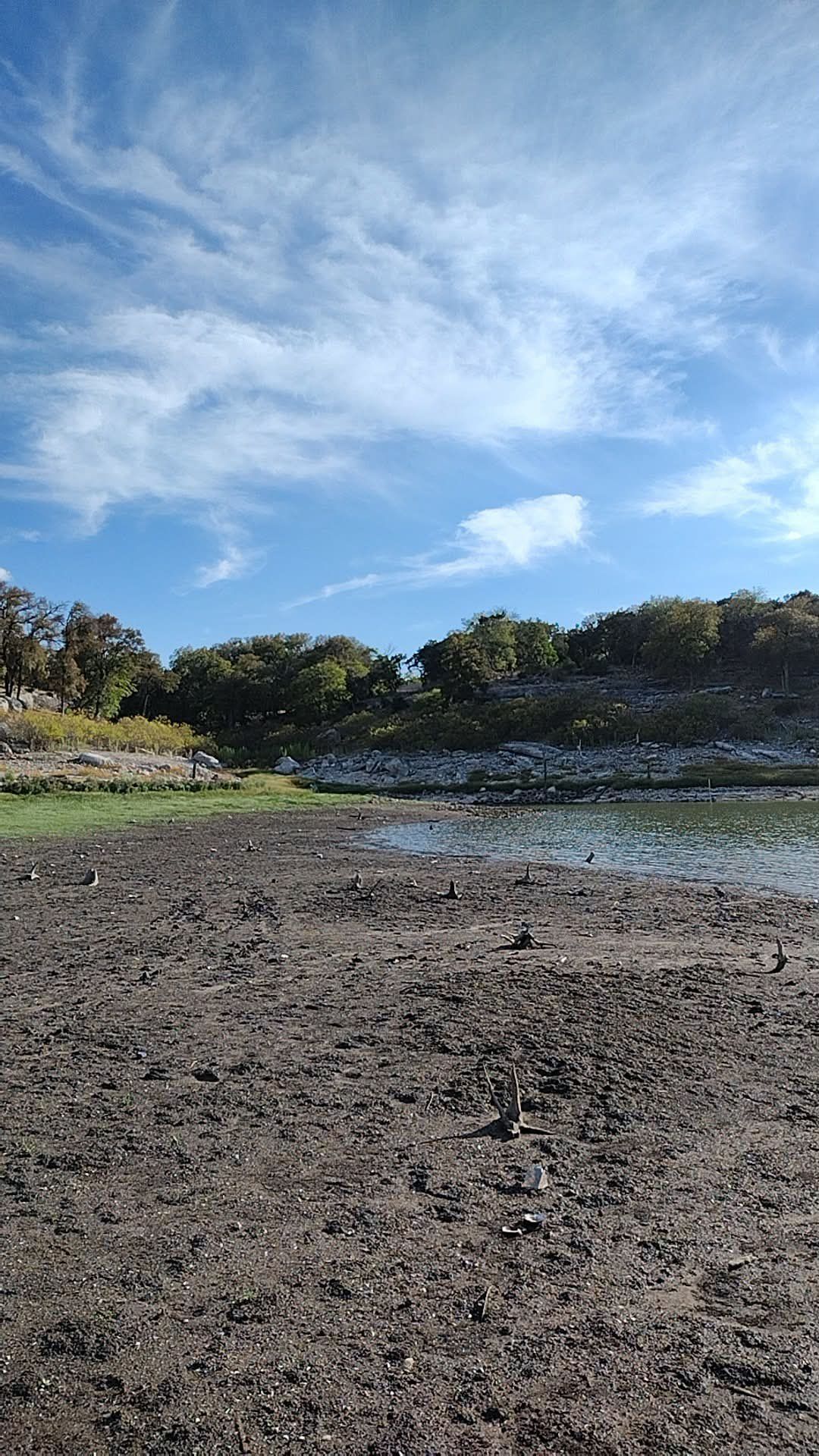
Photo caption:
This was Lake Belton in August 2023. The water was so low it was scary. In 2019, the City of Temple agreed to let Niagara Bottling come here. This company takes water from Lake Belton, cleans it, puts it in bottles, and sells it back to people. The people who live here were not asked if they agreed. Now we are already in Stage 1 water restrictions, and summer hasn’t even started.
Just three years ago, the lake was dangerously low. It was so low that the old bridge supports from Highway 36 could be seen lying on the dry lake bed. That should have been a warning. We live in an area that has droughts again and again. Water is precious here. But even knowing that, city leaders have made deals with not just one, but two AI data centers that will also use our water.
We did not agree to put our water supply at risk. We did not agree to the loud noise from these centers. We did not agree to the extra heat from all that equipment. And we did not agree to give big companies tax breaks while families are struggling to stay in their homes. This is our water. This is our community. We deserve to be heard.
Suzanne M., Temple resident, who took these photos of Lake Belton during the last Stage 2 drought, August 2023
Rowan must be following the rules, right?
Normally, a responsible industrial business would first contact the BRA to purchase an industrial water contract. These are sold by the “acre-foot,” in increments of about 325,000 gallons per year, with a 3.2 million gallon minimum. It is normal for this process to take a year or more. If water is not available from the local river authority, a company might approach a city for permission to buy part of its municipal water.
BRA does not have any water to sell them. All the water in the Brazos River basin is already spoken for, and running out.
BRA had already asked us to decrease our water usage, but because of our town’s growth, our daily water usage has increased by 30%. That growth does not include the water for data centers that Temple City Council has approved but that are not yet online. At this rate, our water shortages will happen much sooner than 2036.
Instead of following the usual procedure, Rowan went straight to Temple City Council, which granted multiple water utility agreements.
Rowan’s estimate is well above the minimum that would have required going through proper channels. For comparison, a local summer camp with twice the employees, and showers for overnight campers, uses far less than 4,000 gallons per day. Something doesn’t add up.
This also assumes their cooling system works as advertised, which they admit they have not proven.
What the Brazos River Authority does
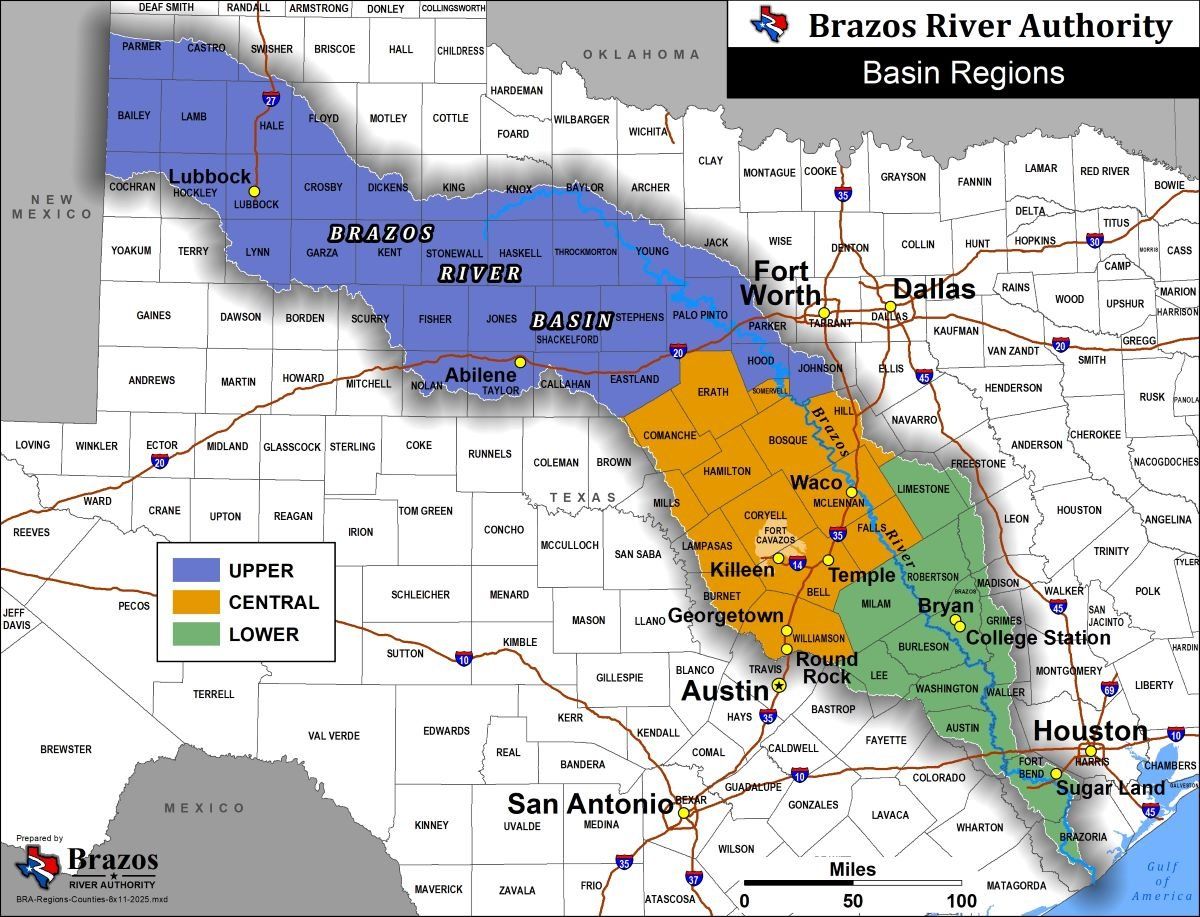
The Brazos River Authority manages the water of the entire Brazos River basin, covering 37 counties from Lubbock to Sugar Land, including Bell County, as well as McLennan (Waco) and Coryell (Fort Hood).
Our interview with the Brazos River Authority. Read the questions and answers (Word document).
What is a water shortage?
In plain terms, it is when you turn on the faucet and nothing comes out.
They must have a plan to fix it
They do. The Region G report listed above includes an 11-point plan to help reduce water shortages, which includes dangerous and unpopular ASR wells. We will cover ASR wells in a future update, or you can help us with the research.
What happens to discarded water
Every time we ask this question, we get a different answer. Perhaps the answer is different for Rowan’s different buildings.
The most recent answer from Rowan, confirmed by the City Council, is that cooling wastewater is tested before being released back into the city system, and if it fails the test, Rowan must use trucks to dispose of it elsewhere.
Temple’s water treatment plants are not capable of treating some of the chemicals these industries might use.
Inconsistencies in Rowan’s story
Rowan admits there is no plan to treat wastewater themselves. They claim they need 2 million gallons of water to charge the cooling system, and that the water will last 10 to 15 years without needing any more for cooling. They also claim they will not add any chemicals to the cooling water.
These statements do not agree. Based on similar systems, it is highly unlikely a system can last 10 to 15 years without anti-corrosive chemicals. Common industry practice also includes anti-microbial chemicals. Again, our water treatment plant is not capable of removing these chemicals.
No proof of a working Rowan data center. As of April 11, 2026, there is no proof of an operational or successful data center built by Rowan.
When we asked for an example of a working data center, Rowan claimed several times over several months that its Bauxite I data center in Maryland was up and running. Multiple reporters contacted local news and Frederick County, Maryland, and every report said the facility was not online. At the Temple City Council meeting on April 16, 2026, Rowan representatives finally recanted that claim.
Needs reviewConfirm whether anything about Bauxite I or another Rowan site has changed since April.
We see this as further evidence that we cannot trust Rowan’s word. The City Council’s lack of concern over these inconsistencies shows a serious lapse in judgment. We need more capable representatives on our City Council.
The “closed loop” claim
Rowan says it won’t use more than a few million gallons once every 10 years, and talks up its closed-loop system. There are more inconsistencies here.
Open-loop cooling
Also known as evaporative chillers, these are the older cooling systems that consumed 5 million gallons of water per day.
Closed-loop water cooling
These are the newer systems Rowan claims to use. They are 70 to 80% more efficient than open-loop systems, but still consume up to 1.5 million gallons per day on a hot day, with annual averages claimed around 400,000 to 750,000 gallons per day. Yet Rowan claims its closed-loop system uses zero additional water.
Advanced cooling
The technology Rowan describes does exist, but it isn’t usually called “closed loop.” It goes by names like “advanced cooling.” Maybe they use the term closed loop because it’s easier for people to understand. The problem is the cost.
A cooling system like the one they describe would cost about $900 million, for the cooling alone. The total budget for Project Temple is $700 million. When asked, Rowan said $700 million is their minimum commitment and the project will likely cost much more. They declined to say whether cooling was the majority of that cost.
We are still investigating.
We asked the City. Many times.
We all did. Several times, over several months.
We have asked the City for the utility agreements covering Meta and all of Rowan’s data centers, including Moriah. So far they have only responded about Moriah.
The consistent claim is that Rowan has an agreement for only, and up to, 4,000 gallons per day for administrative use per project (Temple, Stampede, and Ranger). We are concerned about unexpected additional water needed for cooling, for example maintenance problems from not using anti-corrosives.
We have confirmed that the Moriah water agreement did not supply enough water to run the older closed-loop systems.
Who hides public records that could support what they are asking the public to believe? It doesn’t make sense to us, neighbor.
What the City has disclosed
- The City finally disclosed the old water agreement with Moriah. It authorized less than 1 million gallons per day, much smaller than we expected, and it has since been cancelled.
- We still have not seen the meter or the water agreement with Meta.
Transparency on our water resources during a drought should be as clear as we want our water.