First, a little background on ERCOT
The Electric Reliability Council of Texas (ERCOT) has no regulatory authority. Its job is to identify areas that need power and direct generated power to those areas. It has no ability to fine or force power companies to change behavior. It does, however, collect a lot of data.
ERCOT has aggregate numbers, until you search. ERCOT’s front page makes everything sound great. The website had a major design change in November 2021, after the winter storm.
Given that we were asked to set our thermostats to 65°F during the most recent freeze, it is clear our grid is still not healthy.
The real data still exists on the ERCOT website, but now you really have to dig for it. And we did.
How much power Bell County has to spare
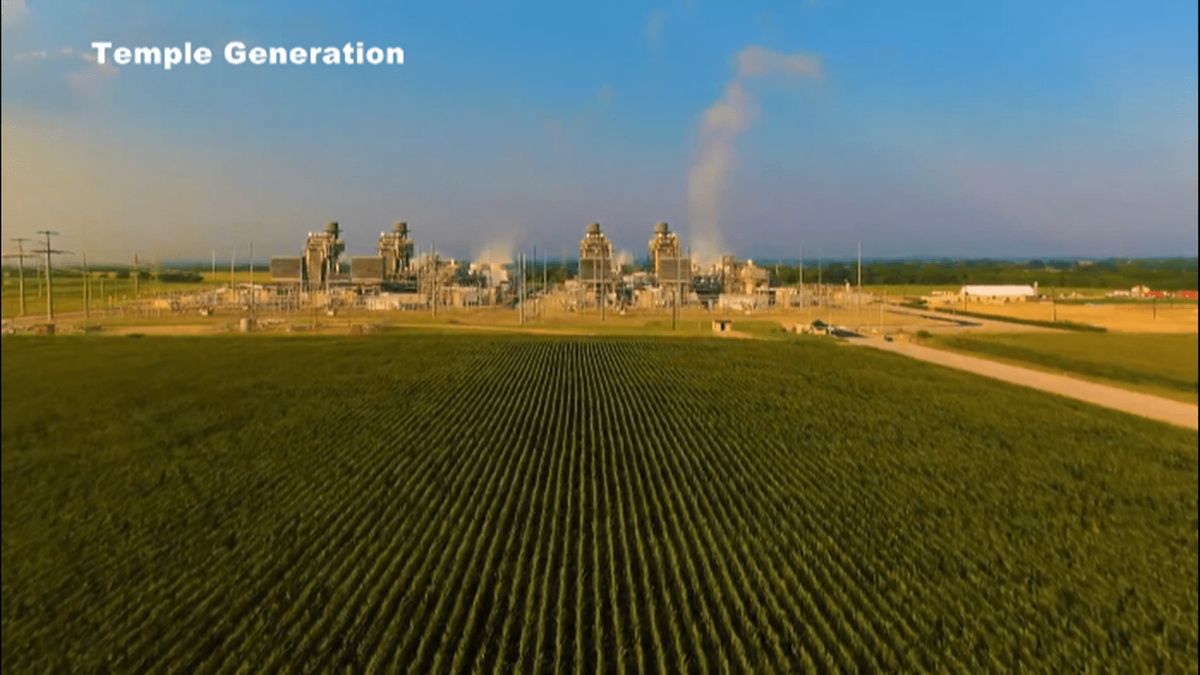
According to ERCOT data, Bell County has a summer power surplus of about 760 MW and a winter surplus of about 505 MW. The summer peak is higher because of solar farms, but the highest load in winter happens at night. This is the power reserve during peak usage, assuming everything is working correctly.
The Moriah substation has been approved for 600 MW and is adjacent to Rowan’s “Project Temple.” Nearby are the other proposed projects, Stampede and Ranger.
Megawatts (MW). Reserve means surplus during peak use, assuming everything is working correctly.
Show as a table
| Measure | Value |
|---|---|
| Bell County winter surplus | 505 MW |
| Moriah substation, approved for Rowan | 600 MW |
| Bell County summer surplus | 760 MW |
Source: ERCOT data as summarized by Temple Stands Together. See the ERCOT Capacity, Demand and Reserves Report, December 2025.
The City appears to have based its estimates on annual averages instead of peak load times.
Who pays for new infrastructure
This is not the only concern about power.
The increased load on the grid will require additional infrastructure that is difficult to directly blame on Rowan or Meta, but will nonetheless be billed to the citizens, as we have seen with other data centers across the state. Our most vulnerable citizens, those on a fixed income, will be most affected by the increased electric costs.
When asked if Rowan had any plans to help offset its impact, Rowan said it already paid for the Moriah substation and had no additional plans to pay for electric infrastructure. This cost falls to us, the ratepayers.
The increased infrastructure costs will be felt by every citizen, as Rowan has no plans to offset its impact. This endangers the lives of the weakest of us.
Read the numbers yourself in the ERCOT Capacity, Demand and Reserves Report, December 2025 (PDF).
And the plot thickens: brownouts
Before the passage of Senate Bill 6, ERCOT warned the Legislature that if this bill did not pass, Texas would be facing brownouts by 2028. SB6 did pass.
Later that year, in December 2025, ERCOT issued another report saying we will have brownouts anyway. Beginning in summer 2028, Texas is expected to have brownouts every summer and winter for the foreseeable future. We simply can’t build power plants fast enough to accommodate the proposed data centers.
We asked ERCOT for additional comments, and they declined, saying another official report is coming in June 2026.
Needs reviewThe old page says ERCOT’s next official report was coming in June 2026, so check whether it is out and update this section.
Read the December 2025 report: ERCOT Grid Insights: Future Resource Adequacy (PDF).
We have usage rules now, right? Senate Bill 6
In 2025, the Texas Legislature passed Senate Bill 6 (SB6), which requires large power consumers (defined as 75 MW or more) to shut down or switch to generator power during any “grid event,” for example, when power plants fail or demand exceeds generation.
- The Meta data center in Temple is exempt.
- Rowan claims they are subject to SB6.
- The law clearly states that it only applies to consumers connected after July 2025.
- Rowan has publicly stated that they will run all power through the Moriah substation.
- Rowan has also stated that the Moriah facility was never fully shut down.
Therefore, it stands to reason that Rowan has a grandfather exemption from SB6, at least for the “Project Temple” site, unless a judge or regulatory body says otherwise. Projects Stampede and Ranger are on nearby property and are possibly also exempt. Connection details are unclear, pending open records request from Oncor.
Needs reviewUpdate this section with the result of the Oncor open records request if it has come back.
We would love to be proven wrong on this point, as it is one of the larger concerns.
What the City Council said
When Temple City Council was asked to please ensure SB6 will apply to Rowan, Mayor Tim Davis responded that the issue is the State’s responsibility. However, it is clearly within the power of the tax abatement agreement.
Rowan appears to be exempt from the rules that prevent it from causing a brownout. The City of Temple has the ability to correct this but has declined to take responsibility.
According to ERCOT, if SB6 had not passed, the State of Texas would be facing brownouts in 2028. Any exceptions or exemptions from SB6 would be a step toward Texas running out of power.